Hair and Scalp Support
Menopause Hair Thinning
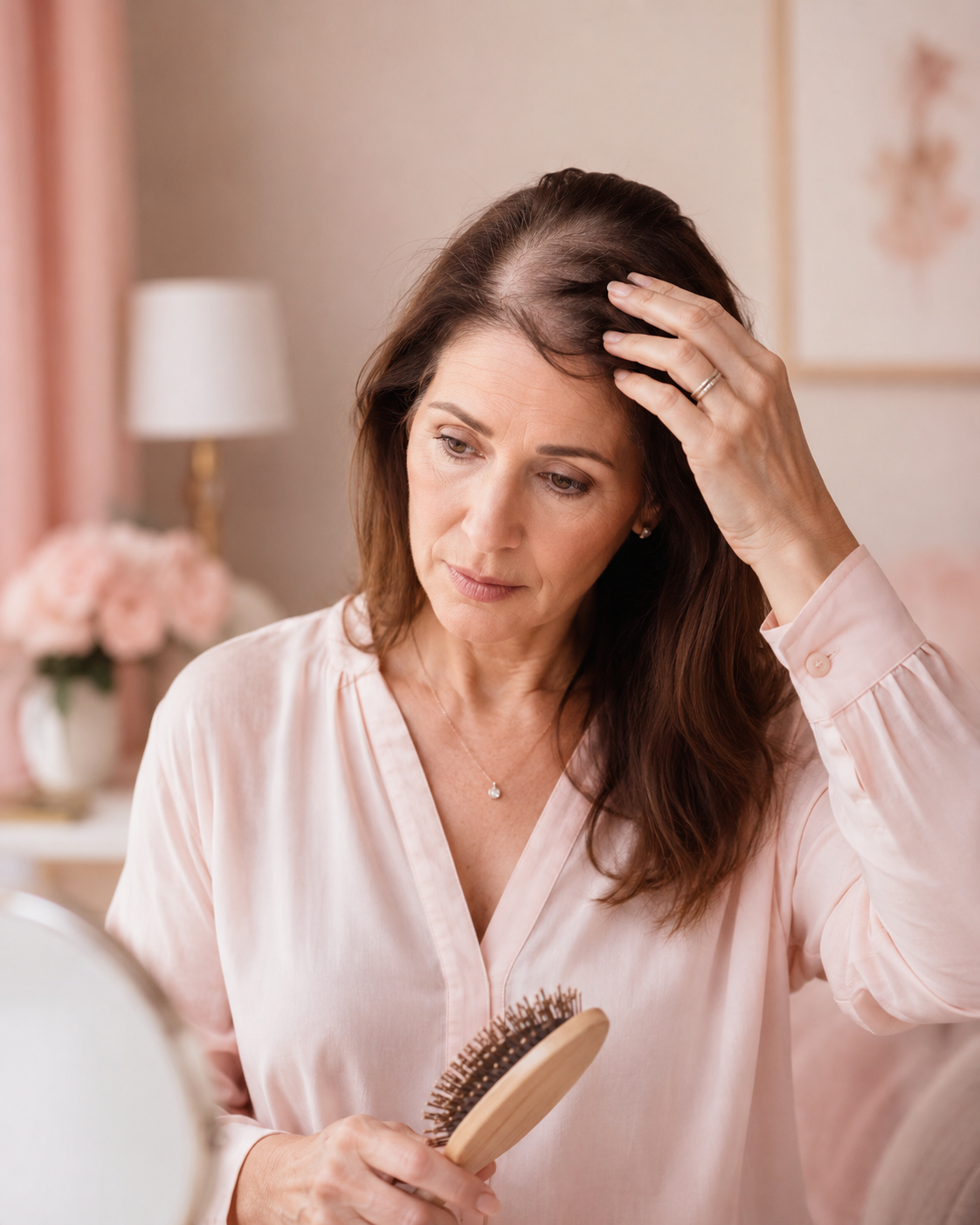
Menopause hair thinning can feel emotional when your part looks wider, your ponytail feels smaller, your hair sheds more in the shower, or your texture seems weaker than it used to.
This guide explains why menopause hair thinning may happen, what can make shedding worse, how to support your scalp and strands, and when hair changes should be checked by a doctor or dermatologist.
Menopause Hair Thinning: Quick Answer
Menopause hair thinning can happen because hormone shifts, aging, genetics, stress, illness, low iron, thyroid changes, medication effects, scalp inflammation, poor sleep, and nutrition changes can all affect the hair growth cycle.
Some women notice gradual thinning around the part or crown. Others notice extra shedding after a stressful season, illness, surgery, rapid weight change, or months of poor sleep. Hair changes can feel deeply personal, but they are not something you caused by caring too much or washing your hair the wrong way.
A supportive plan usually includes gentle scalp care, less breakage, enough protein and key nutrients, stress and sleep support, and medical guidance when shedding is sudden, severe, patchy, painful, or ongoing.
Menopause hair thinning should be taken seriously, but panic routines can make things worse. Gentle consistency is better than harsh treatments, tight hairstyles, or changing every product at once.
Why Menopause Hair Thinning May Happen
Menopause hair thinning may happen partly because estrogen and progesterone levels shift during midlife. These hormone changes can influence the hair growth cycle, scalp oil, and the balance between growth and shedding.
Androgens may also play a role for some women, especially when thinning appears around the crown or part line. Genetics matter too. If female-pattern hair thinning runs in your family, menopause may be the season when it becomes more noticeable.
Hair also responds to the whole body. Thyroid problems, low iron or ferritin, low vitamin D, low B12, medication changes, autoimmune conditions, inflammation, crash dieting, illness, and chronic stress can all contribute to shedding or thinning.
For a general medical overview of hair loss causes and treatments, you can review the American Academy of Dermatology guide to hair loss in women.
What Menopause Hair Thinning Can Look Like
Menopause hair thinning does not look the same for everyone. Some women see more hair in the drain or brush. Others notice that their scalp shows more under bright light, their ponytail feels smaller, or their hair no longer holds volume the same way.
Wider Part
The part line may slowly look wider, especially under overhead lighting or when hair is pulled flat.
Crown Thinning
Some women notice less density at the crown, even if the front hairline mostly stays in place.
More Shedding
Extra hair in the shower or brush may happen when more hairs enter the shedding phase at once.
Breakage
Hair may snap more easily if it is dry, heat damaged, chemically treated, or handled roughly.
Texture Changes
Hair may feel frizzier, coarser, flatter, curlier, straighter, or harder to style than before.
Scalp Changes
Itching, flaking, tenderness, redness, or scaling may point to a scalp condition that needs care.
Hair and Scalp Support Tips
Supporting menopause hair thinning starts with reducing avoidable stress on the hair and scalp. You may not be able to control every hormone change, but you can protect the hair you have while you look for the causes that may be treatable.
Keep the scalp clean without stripping it
A clean scalp supports healthy-looking hair. Wash often enough to remove oil, sweat, product buildup, and flakes, but avoid harsh scrubbing that irritates the scalp.
Be gentle when hair is wet
Wet hair is more fragile. Use a wide-tooth comb, avoid rough towel rubbing, and detangle slowly from the ends upward.
Reduce tension and heat stress
Tight ponytails, heavy extensions, frequent high heat, and aggressive brushing can worsen breakage and traction on fragile hair.
Support hair from the inside
Hair growth depends on the body having enough protein, calories, iron, zinc, vitamin D, B vitamins, and overall health support.
Watch the pattern over time
Take monthly photos in the same lighting and note shedding, stress, illness, medications, diet changes, and scalp symptoms.
What Can Make Menopause Hair Thinning Worse
Hair can be affected by many small stressors stacked together. If you are dealing with poor sleep, stress, low appetite, illness, harsh styling, and hormone changes all at once, shedding may feel much more noticeable.
Common Triggers
- High stress or months of poor sleep
- Recent illness, fever, surgery, or rapid weight loss
- Low protein or restrictive dieting
- Low iron, thyroid issues, vitamin D deficiency, or B12 deficiency
- Harsh bleaching, chemical damage, or frequent high heat
- Tight hairstyles, extensions, or heavy pulling on the hairline
Better Support
- Eat enough protein and steady meals
- Use gentle detangling and lower-heat styling
- Avoid tight styles that pull on fragile areas
- Treat dandruff, itching, or scalp irritation
- Ask about labs if shedding is ongoing or sudden
- Give hair routines time before judging results
When to Ask a Doctor About Hair Thinning
Menopause hair thinning is common, but it is still worth checking if the change feels sudden, heavy, patchy, painful, or different from your usual hair pattern. A doctor or dermatologist can help identify whether the cause may be hormones, genetics, thyroid, iron, medications, stress shedding, scalp inflammation, or another health concern.
Ask for medical guidance if you have bald patches, scalp pain, redness, scaling, sores, sudden heavy shedding, eyebrow loss, hair loss after a new medication, or shedding that continues for months without improvement.
A provider may discuss bloodwork, scalp exam, topical treatments, prescription options, nutrition concerns, hormone-related questions, or referral to a dermatologist. The goal is to find treatable causes early instead of waiting until the thinning feels overwhelming.
Do not ignore patchy hair loss, painful scalp symptoms, sudden heavy shedding, or hair loss with other symptoms like fatigue, weight changes, or feeling unusually unwell.
Your hair changes deserve answers, not shame.
Menopause hair thinning can feel discouraging, but you do not have to guess alone. Start with gentle care, track your pattern, support your body, and ask for medical help when shedding feels sudden, severe, or ongoing.
Important Health Note
This page is for educational purposes only and should not replace medical advice, diagnosis, or treatment. Menopause hair thinning can overlap with thyroid changes, iron deficiency, autoimmune conditions, medication effects, scalp disorders, and other medical concerns, so a qualified healthcare provider should evaluate sudden, severe, ongoing, patchy, painful, or concerning symptoms.
This website may include affiliate links. If you purchase through certain links, Midlife Comfort Lab may earn a small commission at no extra cost to you. You can review the Privacy Policy and Amazon Affiliate Disclosure for more information.