Balanced Eating for Midlife Comfort
Menopause Diet Tips
Menopause diet tips should not be about punishment, crash dieting, or trying to shrink your body overnight. Midlife nutrition works best when it supports energy, bones, muscles, digestion, blood sugar, sleep, and real-life comfort.
This guide explains how to build balanced meals during menopause, what nutrients matter more in midlife, how food can connect with bloating and cravings, and when nutrition questions should be discussed with a healthcare provider.
Menopause Diet Tips: Quick Answer
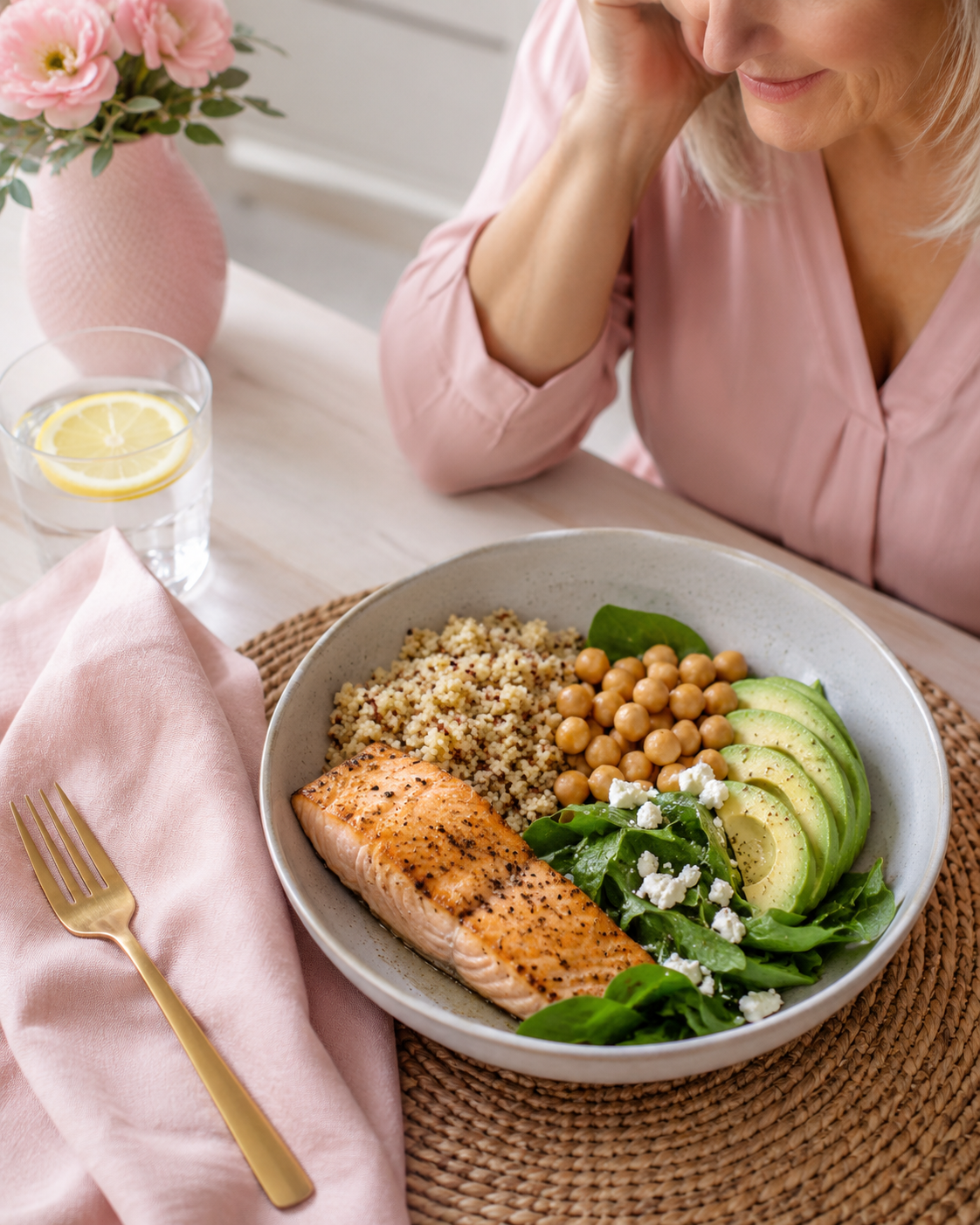
Menopause diet tips should focus on balanced meals, not extreme rules. A helpful menopause eating pattern usually includes protein, fiber-rich carbohydrates, healthy fats, calcium-rich foods, fruits, vegetables, hydration, and enough overall food to support energy.
During menopause, food can affect how you feel day to day. It may influence energy crashes, cravings, digestion, bloating, constipation, sleep, mood, muscle support, heart health, and bone health. Food is not a cure for every symptom, but it can be one part of a stronger midlife support plan.
The NHS menopause lifestyle guidance recommends healthy eating, regular exercise, and support for symptoms during menopause. For many women, that means building steady meals instead of relying on crash dieting or skipping meals.
Menopause diet tips should make your life easier, not more stressful. If a plan makes you feel hungry, guilty, exhausted, or afraid of food, it is probably not the right plan for long-term midlife health.
Why Food Can Feel Different During Menopause
Menopause can change the way your body responds to sleep loss, stress, activity, digestion, cravings, and body composition. Some women notice they feel more sensitive to sugar swings, alcohol, salty foods, large meals, caffeine, or late-night eating than they did before.
This does not mean you did anything wrong. Hormone changes, aging, muscle changes, stress, sleep disruption, medications, thyroid issues, insulin sensitivity, and activity levels can all influence how food affects your energy and comfort.
If your body feels different, the answer is not automatically to eat less and less. Many women do better when they build steadier meals with protein, fiber, healthy fats, and enough nutrients instead of skipping meals all day and feeling out of control later.
A balanced menopause diet can also support bone and muscle. After menopause, bone health becomes more important, and preserving muscle can help with strength, balance, metabolism, and daily function.
Foods to Build Meals Around
The best menopause diet tips are simple enough to repeat. Instead of chasing one “perfect” menopause food, think in meal-building categories. Your plate does not have to look perfect every time, but having a flexible structure can make decisions easier.
Protein Foods
Eggs, fish, chicken, turkey, Greek yogurt, cottage cheese, beans, lentils, tofu, tempeh, and lean meats can support fullness and muscle.
Fiber-Rich Carbs
Oats, brown rice, quinoa, potatoes, beans, lentils, berries, apples, vegetables, and whole grains can support digestion and energy.
Healthy Fats
Avocado, olive oil, nuts, seeds, salmon, sardines, and nut butters can help meals feel satisfying and support overall health.
Calcium Sources
Milk, yogurt, kefir, fortified plant milks, calcium-set tofu, sardines with bones, kale, and fortified foods may help support bones.
Colorful Plants
Fruits and vegetables provide fiber, fluids, potassium, antioxidants, and variety that can support overall health.
Hydrating Choices
Water, herbal tea, soups, fruit, vegetables, and steady fluid intake can help digestion and temperature comfort.
A Simple Menopause Meal Formula
A simple formula can make menopause eating less confusing. You do not have to weigh every bite or follow rigid rules to build a better plate. Most meals can be improved by asking whether they include protein, fiber, color, and enough satisfaction to carry you for a few hours.
Start with a protein source
Protein helps with fullness and muscle support. Try to include it at breakfast, lunch, and dinner instead of saving most protein for one meal.
Add a fiber-rich carbohydrate
Oats, beans, lentils, potatoes, fruit, whole grains, and vegetables can help energy feel steadier and digestion more regular.
Include fruits or vegetables
Colorful plants add nutrients, texture, fiber, and volume. Frozen, canned, and fresh options can all count.
Use enough healthy fat for satisfaction
Olive oil, nuts, seeds, avocado, and fatty fish can make meals more satisfying and help prevent feeling deprived.
Keep hydration steady
Water intake matters for energy, digestion, constipation, and heat comfort. Steady sipping often feels better than trying to catch up at night.
Protein, Fiber, Calcium, and Vitamin D
Protein, fiber, calcium, and vitamin D are often worth extra attention during menopause. They are not magic, but they support areas that matter more in midlife: muscle, digestion, fullness, bones, and long-term strength.
Protein can help support muscle maintenance, especially when paired with resistance exercise. Fiber can support digestion and may help meals feel more satisfying. Calcium and vitamin D are important for bone health after menopause, and your provider can help decide whether you are getting enough through food or need additional support.
Calcium-rich foods may include dairy, fortified plant milks, yogurt, kefir, calcium-set tofu, sardines with bones, leafy greens, and fortified foods. Vitamin D can come from sunlight exposure, some foods, and supplements when recommended.
Menopause Diet Tips for Bloating and Cravings
Bloating and cravings are two of the most frustrating food-related complaints during menopause. Bloating can make clothes feel uncomfortable, while cravings can make you feel like your body is suddenly working against you.
For bloating, look for patterns instead of blaming every food. Carbonated drinks, eating quickly, constipation, large meals, salty foods, alcohol, sugar alcohols, and certain high-fiber foods may bother some people. If fiber is low, increasing it slowly may work better than adding a large amount overnight.
For cravings, steady meals often help. If you skip breakfast, eat very little during the day, or avoid carbohydrates completely, your body may push harder for quick energy later. Including protein, fiber, and enough food earlier in the day can reduce that rebound feeling for some women.
For Bloating
- Eat slower and chew well
- Limit carbonated drinks if they trigger gas
- Increase fiber gradually
- Drink water steadily
- Walk gently after meals
- Track constipation and bowel changes
For Cravings
- Do not skip meals all day
- Add protein at breakfast
- Include fiber-rich carbohydrates
- Sleep support matters
- Plan satisfying snacks
- Avoid all-or-nothing food rules
What to Limit Without Going Extreme
Menopause diet tips do not need to turn into a long list of forbidden foods. It is usually more helpful to notice what affects your symptoms, energy, digestion, and sleep instead of trying to be perfect.
Some women feel better when they limit alcohol, especially if it worsens hot flashes, night sweats, sleep, reflux, or cravings. Others notice caffeine affects anxiety, palpitations, bladder symptoms, or sleep. Highly processed foods, very salty meals, and large late-night meals may also affect bloating or comfort.
This does not mean you can never have coffee, dessert, restaurant food, or comfort food. It means you can learn what your body tolerates now and make choices with information instead of shame.
Worth Watching
- Alcohol if it worsens sleep or hot flashes
- Caffeine if it worsens anxiety, palpitations, or insomnia
- Very salty foods if they worsen puffiness
- Large late meals if they worsen reflux or bloating
- Frequent sugary snacks if energy crashes follow
- Crash diets that leave you exhausted
Better Mindset
- Track patterns without judging yourself
- Add protein before removing everything
- Build meals you can repeat
- Keep satisfying foods in the plan
- Adjust gradually instead of overhauling overnight
- Ask for help if food feels stressful or obsessive
When to Ask for Nutrition or Medical Help
Ask a healthcare provider or registered dietitian for help if you have unexplained weight loss, ongoing digestive symptoms, frequent vomiting, blood in stool, severe restriction, binge eating, diabetes, kidney disease, heart disease, osteoporosis, anemia, thyroid disease, or trouble getting enough food.
You should also ask before starting high-dose supplements, especially calcium, vitamin D, iron, magnesium, herbal menopause products, or anything that may interact with medications. More is not always better, and some supplements are unsafe for certain health conditions.
A provider may check labs, bone health, blood sugar, cholesterol, thyroid, iron, vitamin D, B12, or other concerns depending on your symptoms. The goal is not to make food complicated. The goal is to help you support your body safely.
If menopause diet changes are driven by fear, guilt, extreme restriction, or constant body checking, it may be time to ask for support. Midlife health should not require punishing yourself.
Your meals should support you, not scare you.
Menopause diet tips work best when they help you feel steadier, stronger, and more comfortable. Start with protein, fiber, calcium-rich foods, hydration, and repeatable meals before chasing strict rules.
Important Health Note
This page is for educational purposes only and should not replace medical advice, diagnosis, or treatment. Menopause diet tips may need to be adjusted for diabetes, kidney disease, heart disease, digestive disorders, osteoporosis, thyroid disease, eating disorder history, medication use, allergies, or other medical needs. A qualified healthcare provider or registered dietitian can help you choose a safe plan.
This website may include affiliate links. If you purchase through certain links, Midlife Comfort Lab may earn a small commission at no extra cost to you. You can review the Privacy Policy and Amazon Affiliate Disclosure for more information.