Supplement Safety and Menopause Support
Menopause Supplements
Menopause supplements are popular because many women want relief for hot flashes, night sweats, sleep problems, mood changes, low energy, and body changes without jumping straight into stronger options.
This guide explains what women should know first: evidence is mixed, natural does not always mean safe, and supplements can interact with medications or medical conditions.
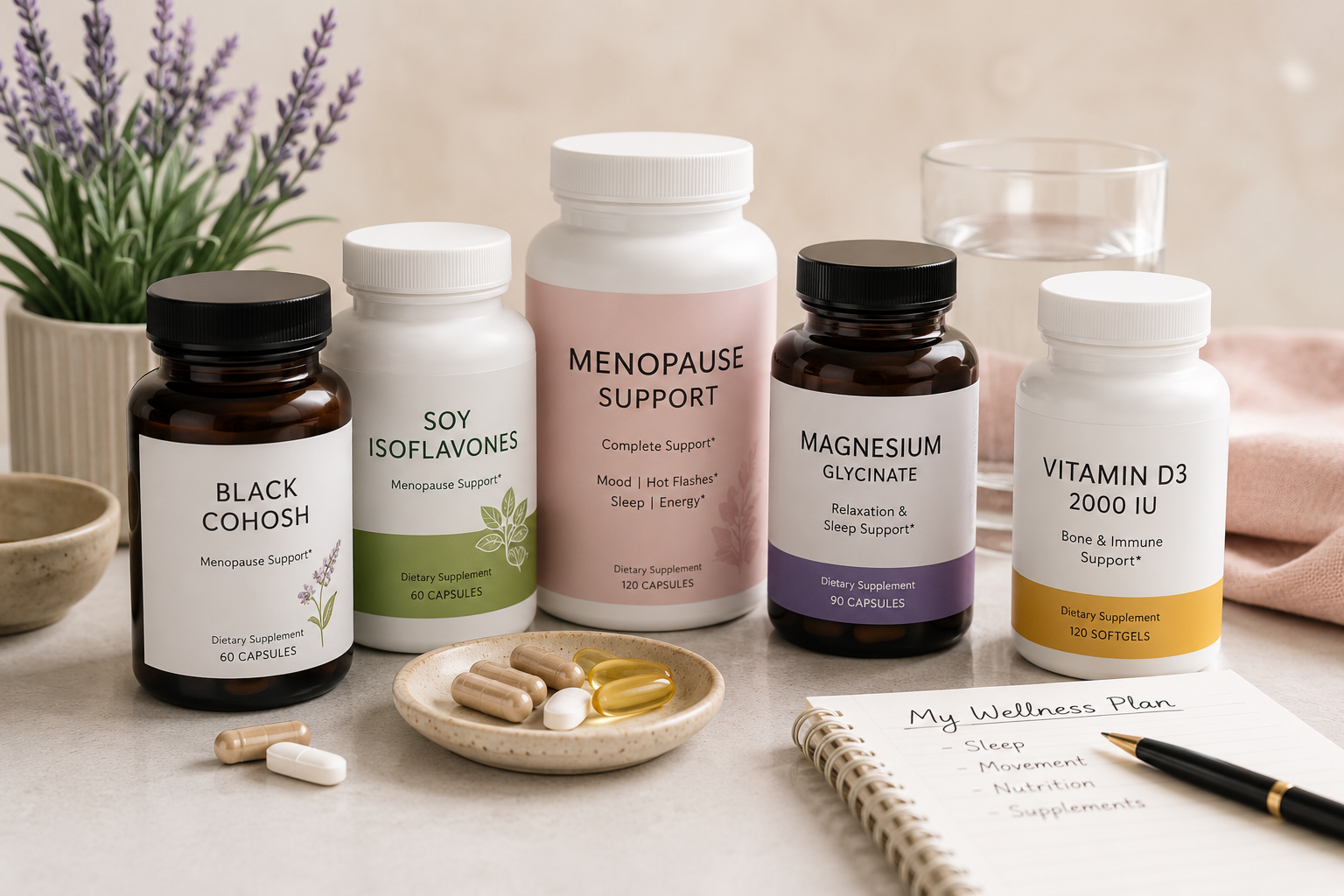
Menopause Supplements: Quick Answer
Menopause supplements are products marketed to help symptoms such as hot flashes, night sweats, sleep problems, mood changes, low energy, brain fog, vaginal dryness, joint aches, or weight changes. Common ingredients may include black cohosh, soy isoflavones, red clover, magnesium, vitamin D, calcium, omega-3s, ashwagandha, evening primrose oil, and blended “menopause support” formulas.
Some women feel better with certain supplements, but the evidence is not equally strong for every ingredient, dose, or product. A supplement can also be marketed beautifully and still have weak research, unclear dosing, poor quality control, or ingredients that may not be safe for your health history.
For a science-based overview of menopause symptoms and complementary approaches, you can review the NCCIH menopause symptoms and complementary health guide.
Menopause supplements should be treated like active products, not harmless candy. Check the ingredient list, consider your medications, and ask a healthcare provider if you are unsure.
Why Menopause Supplements Need Extra Caution
Menopause can make women desperate for relief, especially when hot flashes, poor sleep, anxiety, fatigue, and body changes start affecting daily life. That makes supplement marketing very tempting. A bottle that promises hormone balance, calm, sleep, weight support, or hot flash relief can feel like hope.
The problem is that supplements are not always tested the same way medicines are. Product strength, ingredient quality, purity, and labeling can vary. Some products may contain long blends where you cannot tell how much of each ingredient is included.
Supplements can also interact with prescriptions, over-the-counter medications, surgery, blood thinners, antidepressants, heart medicines, diabetes medicines, thyroid medicine, liver conditions, hormone-sensitive conditions, or cancer history.
This does not mean every supplement is bad. It means menopause supplements should be chosen carefully, with realistic expectations and a safety-first mindset.
Common Menopause Supplement Ingredients
The same ingredients show up again and again in menopause supplements. Some are aimed at hot flashes. Others are aimed at sleep, stress, bones, mood, or general wellness. The key is knowing what the ingredient is supposed to do and whether it fits your situation.
Black Cohosh
Often marketed for hot flashes and night sweats. Evidence is mixed, and rare liver safety concerns have been reported with some commercial products.
Soy Isoflavones
Plant compounds that can act weakly like estrogen in some tissues. They may not be appropriate for everyone, especially with certain hormone-sensitive histories.
Red Clover
Another phytoestrogen ingredient often marketed for hot flashes. Evidence for symptom relief is inconsistent.
Magnesium
Often used for relaxation, sleep, muscle tension, or constipation support. Different forms act differently and may cause digestive effects.
Calcium and Vitamin D
More about bone health than hot flash relief. Dosing should be discussed if you have kidney stones, kidney disease, or high calcium risk.
Herbal Blends
Blends may include several ingredients at once, which can make side effects and interactions harder to identify.
Questions to Ask Before Trying Menopause Supplements
Before trying menopause supplements, it helps to slow down and ask a few practical questions. This protects you from buying products based only on fear, frustration, or influencer claims.
What symptom am I actually trying to improve?
Hot flashes, poor sleep, low energy, anxiety, joint pain, vaginal dryness, and bloating may need different support. One supplement rarely fixes everything.
Could this interact with my medications?
Check with a doctor or pharmacist if you take prescriptions, blood thinners, antidepressants, heart medicine, diabetes medicine, thyroid medicine, or hormone-related treatments.
Does my health history make this risky?
Be extra careful with liver disease, kidney disease, cancer history, blood clot risk, heart disease, high blood pressure, autoimmune conditions, or upcoming surgery.
Is the product clearly labeled?
Look for full ingredient amounts, no hidden proprietary blends when possible, and third-party testing when available.
How will I know if it helped or hurt?
Track symptoms, side effects, sleep, hot flashes, digestion, mood, and any new symptoms. Stop and ask for help if you feel worse.
Supplements for Bones, Sleep, and Energy
Not all menopause supplements are aimed at hot flashes. Some are used to support bone health, sleep, muscle function, energy, or general wellness. These categories still need caution, but they can be easier to understand when you separate the goal.
Calcium and vitamin D are often discussed after menopause because bone health becomes more important as estrogen declines. Magnesium may be discussed for sleep, muscle tension, or constipation, but it can cause diarrhea and may not be safe for everyone in higher amounts.
Iron should not be taken casually unless a healthcare provider confirms you need it. Low iron can contribute to fatigue, but too much iron can be harmful. The same idea applies to vitamin B12, vitamin D, thyroid support blends, and “energy” products.
Red Flags in Menopause Supplement Marketing
Menopause supplement marketing can be emotional. Many ads target women who feel ignored, tired, hot, uncomfortable, or desperate for answers. That makes it even more important to watch for red flags.
Marketing Red Flags
- Promises to cure menopause
- Claims to balance hormones with no proof
- Says natural means no side effects
- Uses fear-based language about aging
- Discourages medical care
- Hides ingredient amounts in large blends
- Claims one product fixes every symptom
Better Signs
- Clear ingredient amounts
- Realistic symptom claims
- Third-party testing when available
- Warnings for medication interactions
- Transparent company information
- Encourages medical guidance when needed
- No shame-based body messaging
When to Ask a Doctor or Pharmacist First
Ask a doctor or pharmacist before starting menopause supplements if you take prescription medicines, use blood thinners, take antidepressants, have liver disease, kidney disease, heart disease, high blood pressure, diabetes, thyroid disease, cancer history, blood clot risk, seizure history, autoimmune disease, or upcoming surgery.
You should also ask for medical guidance if symptoms are severe, new, worsening, or disrupting your life. Supplements should not be used to delay care for heavy bleeding, chest pain, fainting, severe depression, severe insomnia, new heart palpitations, sudden headaches, unexplained weight loss, or symptoms that feel unsafe.
Bring the actual bottle or a photo of the Supplement Facts label to your visit. A provider or pharmacist needs to see the full ingredient list, dose, serving size, and any blends.
Stop using a supplement and seek medical advice if you develop yellowing skin or eyes, dark urine, severe stomach pain, chest pain, fainting, allergic reaction symptoms, unusual bleeding, or symptoms that feel dangerous.
Menopause supplements should be chosen carefully.
A supplement may be part of your support plan, but it should not replace safety, clear information, symptom tracking, or medical care when symptoms are strong. Choose carefully, track honestly, and ask questions before stacking products.
Important Health Note
This page is for educational purposes only and should not replace medical advice, diagnosis, or treatment. Menopause supplements can cause side effects, interact with medications, affect medical conditions, or delay needed care. A qualified healthcare provider or pharmacist can help you decide whether a supplement is appropriate for your situation.
This website may include affiliate links. If you purchase through certain links, Midlife Comfort Lab may earn a small commission at no extra cost to you. You can review the Privacy Policy and Amazon Affiliate Disclosure for more information.