Menopause Joint Pain – Causes, Relief Tips, and When to Worry
Menopause joint pain can feel like stiff knees, aching hips, sore hands, tight shoulders, or a heavy body feeling that makes everyday movement harder than it used to be.
Many women expect hot flashes or mood changes during midlife, but body aches can be just as frustrating. This guide explains why joints may feel more tender during the menopause transition and what gentle habits may help you feel more comfortable.
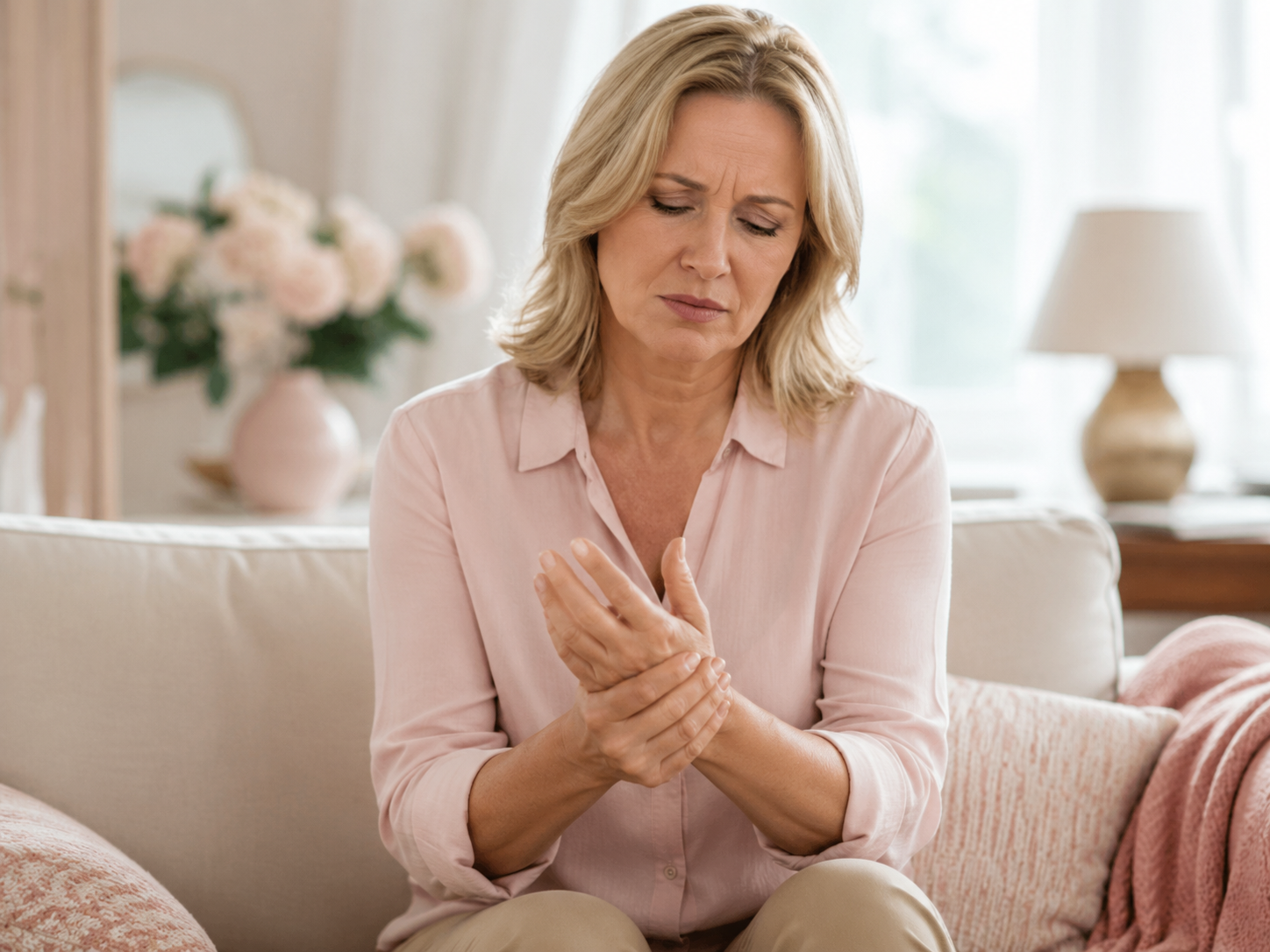
Menopause joint pain can show up in different ways
Menopause joint pain does not always feel like one clear injury. It may feel like stiffness when you first get out of bed, soreness when you climb stairs, aching in your hands, or a tight feeling through your hips, neck, back, or shoulders.
Some women notice that the discomfort comes and goes. One day may feel manageable, and the next day may feel like the body is moving through mud. That up-and-down pattern can make it hard to know whether the problem is hormones, inflammation, sleep, stress, arthritis, old injuries, or several things happening together.
Your pattern can help you decide whether gentle support is enough or whether the symptom needs a medical check. Aches that improve after movement may feel different from sharp pain, swollen joints, or pain that keeps getting worse.
Why menopause joint pain may happen
Joint pain during midlife may have more than one cause. Changing estrogen levels may influence inflammation, pain sensitivity, and how the body recovers.
But hormones are not the only factor. Poor sleep, night sweats, stress, dehydration, less movement, old injuries, arthritis, thyroid issues, autoimmune conditions, vitamin deficiencies, and medication side effects may also contribute to joint aches.
What can make stiffness feel worse
The body often feels more sensitive when several stressors stack together. You may notice more aching when sleep is poor, activity drops, or your body is under extra pressure.
- Hot flashes or night sweats that interrupt sleep
- Sitting for long periods without movement breaks
- Very intense exercise without enough recovery
- Dehydration or not eating enough protein
- Stress, tension, and clenching the body
- Old injuries that become more noticeable with age
Where menopause joint pain may show up
Midlife aches can move around the body. Some women feel it mostly in one area, while others feel a more general body ache. The location matters because it may help you separate normal stiffness from a joint issue that needs attention.
Knees and hips
Stairs, standing, walking longer distances, or getting up from a chair may feel harder when these joints are stiff.
Hands and wrists
Hands may feel stiff, sore, swollen-feeling, or less comfortable with daily tasks that require grip or fine movement.
Neck and shoulders
Tension, poor sleep, stress, and posture can make upper-body aches feel more noticeable during midlife.
Back and feet
Body weight changes, footwear, activity shifts, and old injuries may all add pressure to the back and feet.
Gentle relief tips for menopause joint pain
Relief does not have to begin with an extreme routine. For many women, the best place to start is with small habits that reduce stiffness, support strength, and help the body recover.
Warm up before asking your body to do more
If mornings are stiff, try slow movement before jumping into chores. Shoulder rolls, ankle circles, gentle walking, or a few minutes of stretching can help the body ease into the day.
Choose low-impact movement
Walking, swimming, cycling, gentle yoga, and mobility work can support circulation and flexibility without the pounding that may irritate sore joints.
Build strength slowly
Strong muscles help support joints. Light weights, resistance bands, or bodyweight exercises may help over time when started gradually and done with good form.
Protect sleep and recovery
Pain often feels worse when the body is under-rested. If night sweats, anxiety, or sleep problems are part of your pattern, supporting sleep may also help your joints feel less reactive.
When joint pain should be checked
Menopause can be part of the reason your joints ache, but it should not become a reason to ignore symptoms that may need medical care.
A healthcare provider can help check for arthritis, autoimmune disease, thyroid concerns, vitamin deficiencies, injury, medication effects, or other causes that need a specific treatment plan.
Do not ignore these signs
- Joint swelling, redness, warmth, or visible inflammation
- Severe pain, sudden pain, or pain after an injury
- Weakness, numbness, tingling, or loss of movement
- Fever, unexplained weight loss, or feeling very unwell
- Pain that wakes you at night or keeps getting worse
- Morning stiffness that lasts a long time or affects daily life
Living more comfortably with menopause joint pain
Menopause joint pain can make you feel like your body changed overnight. That can be scary and frustrating, especially when normal things like stairs, sleep, errands, or housework suddenly feel harder.
The goal is not to push through pain or stop moving completely. The goal is to support your body with gentle movement, better recovery, realistic strength, and medical guidance when symptoms do not feel normal.
You deserve answers and comfort that fit your real life. If menopause joint pain is part of your midlife transition, small daily support can make a meaningful difference.