Heart Rhythm and Midlife Symptoms
Menopause Heart Palpitations
Menopause heart palpitations can feel like fluttering, pounding, racing, skipped beats, or a sudden awareness of your heartbeat in your chest, neck, or throat.
This guide explains why menopause heart palpitations may happen, what can trigger them, how to track the pattern, and when a racing or irregular heartbeat needs medical care.
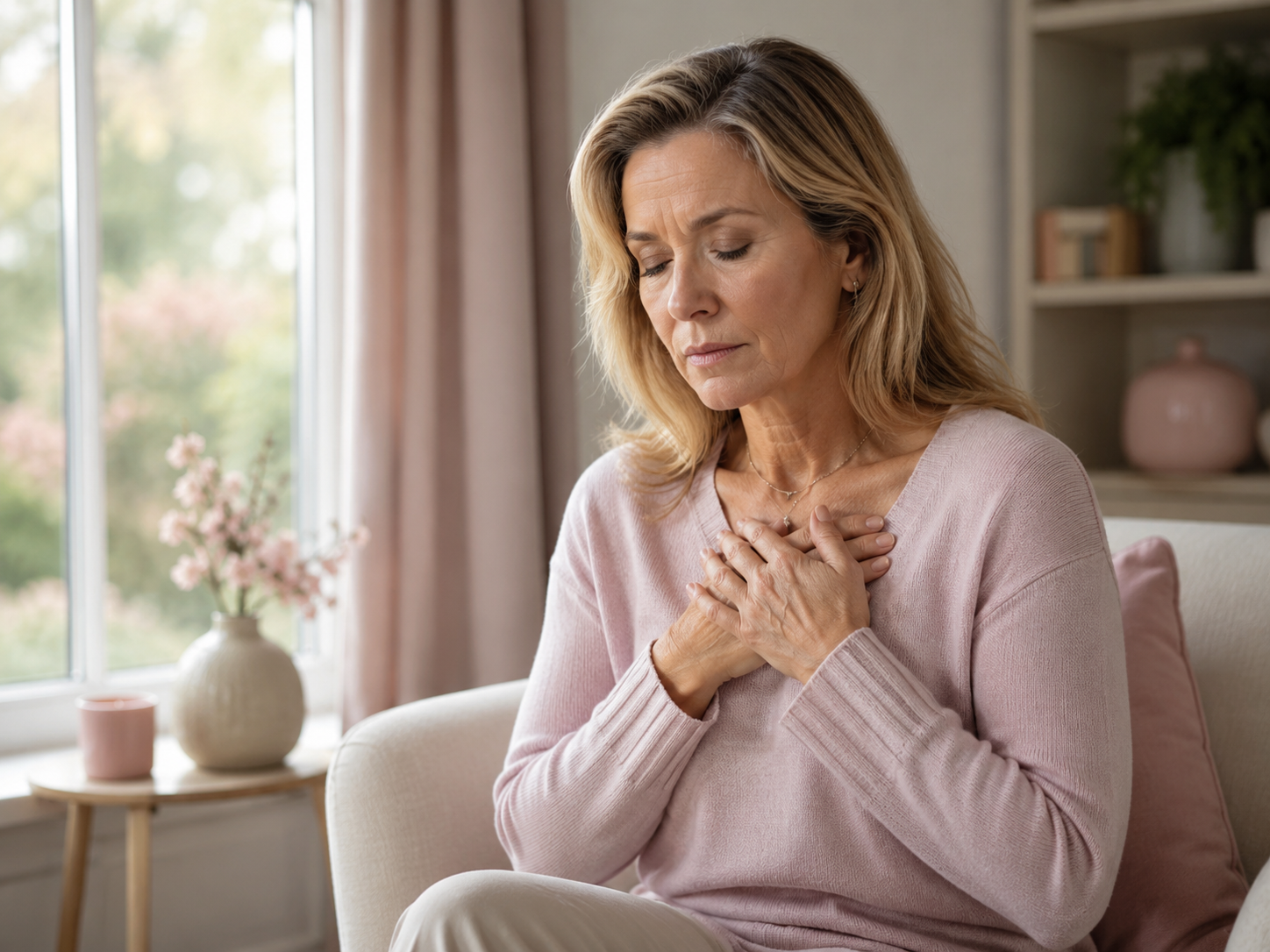
Menopause Heart Palpitations: Quick Answer
Menopause heart palpitations are episodes where your heartbeat suddenly feels more noticeable, fast, fluttery, pounding, skipped, or irregular. Some women notice them during perimenopause. Others notice them after a hot flash, during a night sweat, after a stressful day, or when they are finally lying still and trying to rest.
Menopause heart palpitations may be connected to hormone shifts, temperature changes, anxiety, poor sleep, caffeine, alcohol, dehydration, low blood sugar, nicotine, or stress. Many palpitations are not dangerous, but that does not mean they should be ignored, especially if they are new or happening more often.
Similar sensations can also happen with heart rhythm problems, thyroid changes, anemia, medication side effects, blood sugar changes, infections, dehydration, or other medical issues. That is why a safe plan includes tracking the pattern, reducing avoidable triggers, and asking a healthcare provider when symptoms feel new, frequent, severe, or concerning.
Menopause heart palpitations can be frightening even when they are harmless. Wanting clear answers about your heart is reasonable, not dramatic.
What Menopause Heart Palpitations Can Feel Like
Menopause heart palpitations can feel different from person to person. Some women describe a fluttering feeling, like a butterfly in the chest. Others feel a hard thump, a skipped beat, a racing pulse, or a sudden surge that makes them stop and wonder what just happened.
You may feel palpitations in your chest, throat, neck, ears, or upper body. They may last a few seconds, come and go in waves, or feel more noticeable when you are lying down. Some women notice them most at night because the room is quiet and there are fewer distractions.
Palpitations may also happen around hot flashes. A hot flash can bring warmth, sweating, flushing, anxiety, and a sudden heartbeat change that makes the episode feel more intense. That combination can be unsettling, especially if you did not expect heart symptoms to be part of menopause.
Fluttering
A flutter can feel like your heart is vibrating, flipping, or beating unevenly for a moment.
Skipped Beats
You may feel a pause, a thump, or a sensation that your heart missed a beat and then caught up.
Racing Heart
A racing feeling may happen during hot flashes, anxiety, poor sleep, after stimulants, or when you wake suddenly.
Pounding
A pounding heartbeat may feel strong in your chest, throat, neck, ears, or upper body.
Why Menopause Heart Palpitations May Happen
Menopause heart palpitations may happen because hormone changes can influence the nervous system, body temperature regulation, blood vessels, sleep quality, stress response, and how strongly you notice body sensations. When estrogen levels shift, some women become more sensitive to internal changes that used to pass unnoticed.
Hot flashes and night sweats can also play a role. When your body suddenly heats, sweats, or wakes from sleep, your nervous system may feel activated. That surge can make the heartbeat feel faster, stronger, or more irregular for a short time.
Anxiety can make this cycle worse. A palpitation can trigger fear, fear can increase adrenaline, and adrenaline can make the heartbeat feel even more noticeable. That does not mean it is “all in your head.” It means the body and nervous system can feed into each other.
But hormones are not the only possible cause. Palpitations can also be triggered by caffeine, alcohol, nicotine, dehydration, low blood sugar, poor sleep, thyroid changes, iron deficiency anemia, some medications, infections, or heart rhythm problems.
For a general overview of heart palpitations and when to seek help, you can review the NHS heart palpitations guide.
Common Triggers to Watch For
Tracking triggers can make menopause heart palpitations feel less mysterious. You do not have to become obsessed with every heartbeat, but writing down a few details can help you and your healthcare provider see patterns.
It helps to note when the episode happened, how long it lasted, what it felt like, whether it happened with a hot flash, and whether you had other symptoms. Also notice caffeine, alcohol, nicotine, stress, skipped meals, dehydration, medication changes, and sleep quality.
Possible Triggers
- Hot flashes or night sweats
- Anxiety, panic, grief, or ongoing stress
- Caffeine, energy drinks, alcohol, or nicotine
- Dehydration or skipping meals
- Poor sleep or waking suddenly at night
- Some cold medicines, inhalers, or stimulant medications
- Low blood sugar or long gaps without food
- Intense exercise without enough recovery
Useful Details to Track
- Time of day and what you were doing
- How long the episode lasted
- Whether your heartbeat felt fast, skipped, pounding, or irregular
- Whether it happened with hot flashes, sweating, or anxiety
- Any chest pain, dizziness, fainting, or shortness of breath
- Recent medication, supplement, or caffeine changes
- Pulse rate if you can check it safely
- How often the episodes are happening
How Hot Flashes, Sleep, and Stress Can Connect
Menopause heart palpitations often do not happen alone. They may show up alongside hot flashes, night sweats, sleep problems, anxiety, or fatigue. When these symptoms stack together, the whole body can feel more reactive.
Poor sleep is especially important. If night sweats wake you repeatedly, your nervous system may stay more sensitive the next day. You may feel jittery, tired, emotional, or more aware of your heartbeat. That can make normal body sensations feel louder.
Stress can also lower your threshold. If you are caring for family, working, managing health worries, or carrying a lot emotionally, your body may already be running on high alert. In that state, palpitations can feel more intense and harder to ignore.
What May Help Calm Palpitations
When palpitations happen, the first goal is safety. If you have chest pain, fainting, severe shortness of breath, confusion, sudden weakness, or a heartbeat that stays very fast or irregular, seek urgent medical care.
If the episode feels mild, brief, and familiar, calming your nervous system may help you feel more in control. Sit down, breathe gently, sip water if you may be dehydrated, and notice whether the episode is passing or getting worse.
Sit down and notice what is happening
Stop what you are doing, sit upright, and notice whether the feeling is fast, skipped, pounding, fluttering, or paired with other symptoms.
Slow your breathing gently
Calm, steady breathing may help if stress or anxiety is part of the episode. Do not force deep breathing if it makes you feel worse.
Drink water if you may be dehydrated
Dehydration can make palpitations more noticeable for some people. Hydration is not a cure, but it can be a simple support step.
Look for warning symptoms
Chest pain, fainting, severe shortness of breath, confusion, weakness, or a sustained very fast heartbeat should be treated seriously.
Write down the episode
Record the time, length, possible triggers, symptoms, and whether it happened with a hot flash, anxiety, caffeine, or poor sleep.
Lifestyle Habits That May Reduce Episodes
Some women notice fewer menopause heart palpitations when they reduce common triggers and support the basics: sleep, hydration, steady meals, movement, and stress regulation. These steps are not a substitute for medical care, but they may help reduce avoidable episodes.
Supportive Habits
- Limit caffeine if it seems to trigger episodes
- Avoid energy drinks or stimulant-heavy products
- Drink water steadily through the day
- Eat regular meals to avoid blood sugar dips
- Reduce alcohol if it worsens night symptoms
- Protect sleep with a cooler bedroom and wind-down routine
- Use gentle movement most days if your doctor says it is safe
- Practice calming routines before bed
When to Be More Careful
- Do not ignore new or worsening palpitations
- Do not assume chest pain is menopause
- Do not push through faintness or severe dizziness
- Do not mix stimulants without checking medication labels
- Do not dismiss symptoms if you have a heart history
- Do not wait if palpitations happen with shortness of breath
- Do not rely only on internet advice for heart symptoms
- Do not be embarrassed to ask for an evaluation
What a Doctor May Check
If menopause heart palpitations keep happening, a healthcare provider may ask detailed questions about your symptoms, family history, medications, supplements, caffeine, alcohol, sleep, anxiety, and menopause symptoms. They may also ask how long the palpitations last and whether they happen during exercise or rest.
Your provider may check your pulse, blood pressure, heart rhythm, thyroid, iron levels, electrolytes, blood sugar, or other labs depending on your situation. Some people may need an ECG, Holter monitor, event monitor, or cardiology referral to capture the rhythm during an episode.
Getting checked does not mean something is definitely wrong. It means you are making sure a treatable cause is not being missed. That can bring peace of mind and a clearer plan.
Helpful details to bring: when episodes happen, how long they last, your pulse if known, caffeine or alcohol use, medications, supplements, menopause symptoms, and any warning symptoms.
When Menopause Heart Palpitations Need Medical Care
Talk with a healthcare provider if menopause heart palpitations are new, frequent, worsening, lasting longer than usual, happening with exercise, waking you from sleep, or making you feel unsafe. You should also ask for help if you have a history of heart disease, high blood pressure, thyroid problems, anemia, diabetes, or fainting.
Seek urgent medical care if palpitations come with chest pain, pressure, fainting, severe dizziness, severe shortness of breath, sudden weakness, confusion, blue lips, or a heartbeat that stays very fast or irregular and does not settle.
Even if the episode passes, it is still worth mentioning to a provider if it keeps happening or affects your quality of life. You deserve clarity, not constant worry every time your heart feels different.
Get urgent help for palpitations with chest pain, fainting, severe shortness of breath, sudden weakness, confusion, or a sustained very fast or irregular heartbeat.
Your heart symptoms deserve clarity.
Menopause heart palpitations can be frightening, but you do not have to guess alone. Track the pattern, reduce triggers, support sleep and stress, and ask for medical guidance when symptoms feel new, frequent, severe, or concerning.
Important Health Note
This page is for educational purposes only and should not replace medical advice, diagnosis, or treatment. Menopause heart palpitations can overlap with heart rhythm problems, thyroid changes, anemia, dehydration, medication effects, anxiety, and other medical concerns, so a qualified healthcare provider should evaluate new, frequent, severe, worsening, or concerning symptoms.
This website may include affiliate links. If you purchase through certain links, Midlife Comfort Lab may earn a small commission at no extra cost to you. You can review the Privacy Policy and Amazon Affiliate Disclosure for more information.