Sleep and Cooling Support
Night Sweats During Menopause
Night sweats during menopause can wake you up hot, damp, restless, and exhausted. This page explains why it happens, what to keep beside your bed, how to cool the room, what triggers to track, and when to ask a doctor for help.
If you are tired of waking up sweaty, changing clothes, flipping pillows, and struggling to fall back asleep, start here with a practical night sweats during menopause comfort plan.
Night Sweats During Menopause: Quick Answer
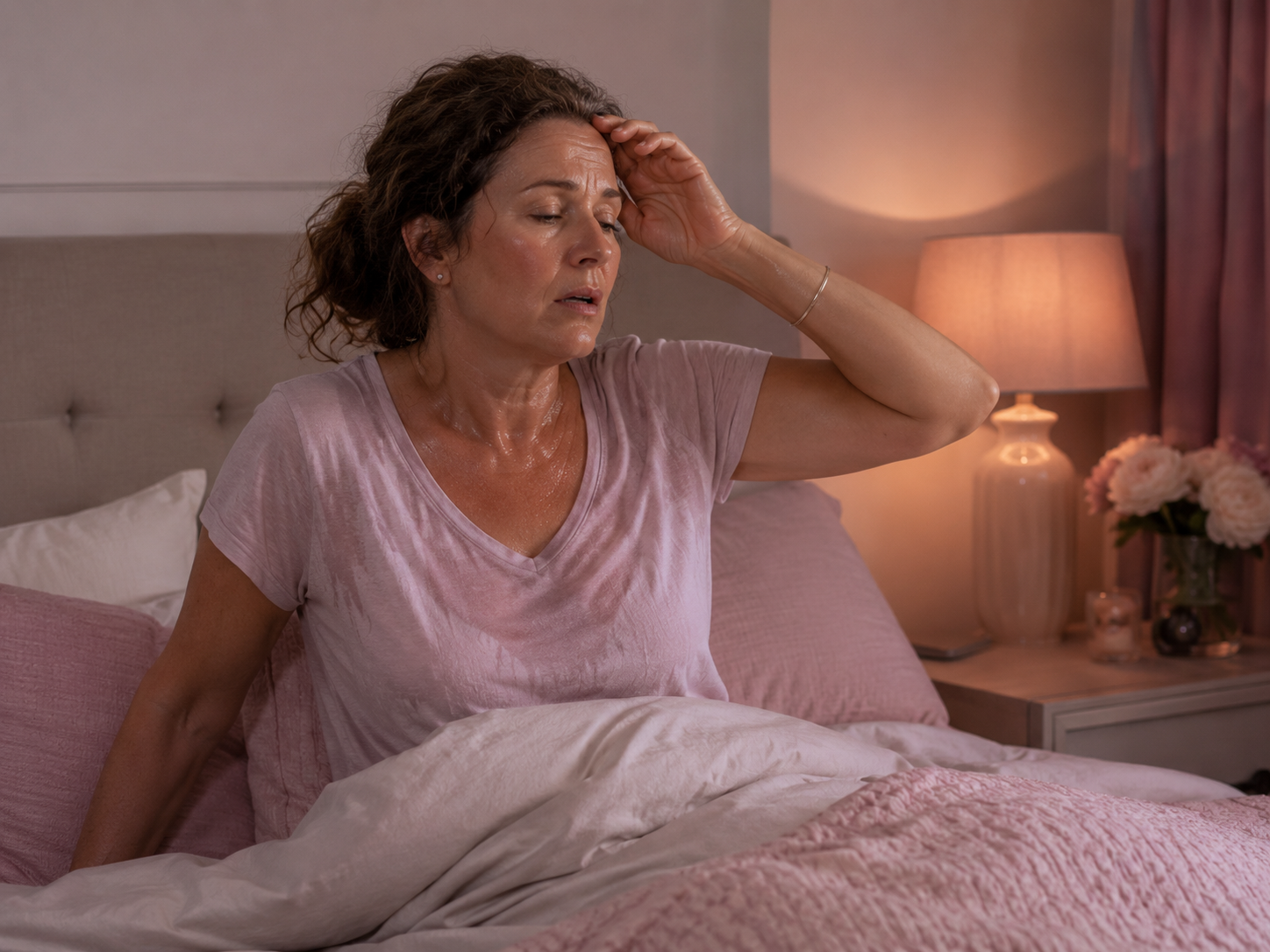
Night sweats during menopause are nighttime episodes of overheating and sweating that can wake you from sleep. They often happen because hormone changes can affect how the body regulates temperature. Some women wake slightly warm, while others wake drenched enough to change clothes, switch pillows, or strip the bedding.
Night sweats during menopause can be frustrating because they do not only affect the night. When sleep is interrupted over and over, the next day may bring fatigue, brain fog, irritability, cravings, anxiety, and low motivation. A bad night can make the whole next day feel harder.
The best support plan includes a cooler bedroom, lighter bedding, breathable sleepwear, a bedside cooling kit, trigger tracking, and a healthcare conversation if night sweats are severe, drenching, new, or interfering with daily life.
Simple bedside setup: ice water, a soft cold pack, a dry sleep shirt, a thin towel, an extra pillowcase, and a low light you can use without fully waking your brain.
Why Night Sweats During Menopause Happen
Night sweats during menopause are often connected to hot flashes. These are sometimes called vasomotor symptoms because they involve body temperature, blood vessels, flushing, and sweating. During perimenopause and menopause, estrogen levels can fluctuate and decline. Those changes may make the brain’s temperature-control system more sensitive.
When your internal thermostat reacts, your body may suddenly try to cool itself down. You may feel heat rise through your chest, neck, face, scalp, or whole body. Then sweating starts. Once the sweat cools, you may feel chilled and reach for the covers again. That back-and-forth pattern can keep you awake even after the heat passes.
Some women only get night sweats during certain phases of perimenopause. Others continue to deal with them after menopause. The pattern can come and go. You may have a few quiet nights, then several rough nights in a row. That does not mean you failed. It means your body may need a better comfort system and possibly medical support.
Menopause is common, but it is not the only cause of night sweats. Medications, fever, infections, thyroid changes, alcohol, blood sugar changes, anxiety, sleep apnea, and other health issues can also cause sweating at night. That is why new, severe, unexplained, or drenching night sweats should be discussed with a healthcare provider.
For official menopause symptom information, you can also review the Office on Women’s Health menopause symptoms guide.
Bedside Cooling Kit for Night Sweats During Menopause
The best time to prepare for night sweats during menopause is before they happen. Once you are already sweaty, annoyed, and half-awake, you do not want to walk around the house looking for water, towels, or clean clothes. A bedside kit helps you cool down quickly and return to sleep with the least amount of movement.
Your bedside kit does not need to be expensive. It just needs to be practical. Keep everything close enough that you can reach it without turning on bright lights. The goal is to stay calm, cool your body, and avoid fully waking yourself up.
Ice Water
Keep a covered glass or insulated bottle of ice water beside the bed. A few cold sips can help you cool down without walking to the kitchen.
Cold Pack
Keep a soft gel ice pack, cooling pouch, or chilled wrap nearby. Use it on the back of your neck, chest, wrists, or behind the knees.
Dry Backup
Keep a clean sleep shirt, thin towel, and extra pillowcase within reach so you can change quickly without remaking the whole bed.
If frozen cold packs feel too harsh, wrap them in a soft towel or use a cool gel pack instead of an icy one. Cooling should feel soothing, not shocking. If your skin is sensitive, never place frozen items directly on bare skin.
Bedroom Changes That Help Night Sweats During Menopause
Your bedroom setup matters. A hot room, thick comforter, heavy pajamas, or heat-trapping mattress can make night sweats during menopause harder to manage. You may not be able to control every symptom, but you can make the room easier to recover in.
Use breathable bedding instead of heavy blankets. A sheet plus a light blanket is easier to adjust than one thick comforter.
Keep a fan pointed near the bed, or use a small bedside fan you can turn on without getting up.
Choose lightweight or moisture-wicking sleepwear. Heavy cotton can stay wet and cold after sweating.
Place a thin towel over your pillow if neck or hair sweating is common. It is easier to swap a towel than remake the bed.
Use a low light instead of bright overhead lights. Bright light can wake your brain and make it harder to fall back asleep.
Keep your phone away from the bed when possible. Scrolling after a night sweat can turn a quick wake-up into an hour awake.
Common Triggers That Can Make Night Sweats Worse
Triggers are personal. Some women notice night sweats after alcohol. Others notice them after spicy food, stress, heavy bedding, hot showers, or a warm bedroom. Some women cannot find a clear trigger at all. Tracking is not about blame. It is about giving yourself clues.
Evening Triggers
- Alcohol, especially wine or cocktails close to bedtime
- Spicy foods or heavy late meals
- Caffeine later in the day
- Hot drinks right before bed
- Hot showers or warm baths too close to bedtime
- Heavy pajamas, fleece blankets, or thick comforters
Body and Stress Triggers
- Going to bed stressed, upset, or emotionally activated
- Poor sleep from the night before
- Skipping meals or blood sugar dips
- Certain medications or supplements
- Illness, fever, thyroid changes, or other medical causes
- Untreated sleep issues that keep waking you up
Try tracking night sweats during menopause for two weeks. Write down bedtime, room temperature, bedding, sleepwear, alcohol, caffeine, spicy foods, stress level, and whether you woke sweaty. You may see a pattern that is hard to notice when you are exhausted.
What to Do When You Wake Up Sweating
A simple middle-of-the-night routine can keep night sweats during menopause from turning into a full sleep disaster. The routine should be boring, quiet, and easy to repeat.
First, sit up slightly and take a few slow breaths. Sip ice water. Place a cool pack or cooling cloth on the back of your neck or chest for a minute or two. If your shirt is damp, change into the dry shirt beside the bed. Flip the pillow or swap the pillowcase. Then get back under a light layer instead of piling heavy blankets back on.
Try not to turn on bright lights. Try not to check messages. Try not to start problem-solving your whole life at 2 a.m. If your mind starts racing, repeat one simple phrase such as, “I am cooling down, and I can rest again.” It sounds small, but a predictable routine can help your body stop treating every night sweat like an emergency.
Keep the routine simple: cool drink, cool pack, dry layer, low light, back to bed. The less you do, the easier it may be to fall asleep again.
Product Ideas for Night Sweats During Menopause
Products will not cure night sweats during menopause, but the right comfort items may make sweaty nights easier. Focus on items that help with cooling, moisture, quick changes, and easy cleanup.
The best menopause comfort products are not always fancy. Sometimes the biggest relief comes from simple items that help you stay mostly asleep instead of fully waking up.
When Night Sweats During Menopause Need Medical Advice
Night sweats during menopause are common, but some patterns deserve medical attention. Talk with a healthcare provider if night sweats are drenching, new, severe, getting worse, happening with fever, causing major sleep loss, or affecting your daily life.
You should also ask for medical advice if night sweats happen with unexplained weight loss, swollen lymph nodes, persistent cough, chest pain, shortness of breath, fainting, racing heartbeat that feels unusual, or symptoms that do not feel like your normal menopause pattern.
A healthcare provider can help rule out other causes and talk through treatment options. Depending on your health history, options may include lifestyle steps, nonhormonal medications, hormone therapy discussion, sleep support, or treatment for another condition.
If night sweats during menopause are destroying your sleep, that matters. Sleep is not a luxury. Broken sleep can affect mood, memory, energy, appetite, relationships, and safety during the day.
Seek urgent care for night sweats with chest pain, trouble breathing, fainting, confusion, sudden weakness, severe illness, or symptoms that feel dangerous.
You deserve a calmer night, not another sweaty guessing game.
Night sweats during menopause can be exhausting, but a better setup can help. Start with your bedside cooling kit, lighten your bedding, track triggers, and ask for medical support when symptoms keep stealing your sleep.
Important Health Note
This page is for educational purposes only and should not replace medical advice, diagnosis, or treatment. Night sweats during menopause can overlap with other health conditions, so a qualified healthcare provider should evaluate sudden, severe, ongoing, drenching, or concerning symptoms.
This website may include affiliate links. If you purchase through certain links, Midlife Comfort Lab may earn a small commission at no extra cost to you. You can review the Privacy Policy and Amazon Affiliate Disclosure for more information.