Skin and Beauty Support
Menopause Skin Changes
Menopause skin changes can include dryness, dullness, sensitivity, thinner-looking skin, texture changes, slower healing, and fine lines that seem to become more noticeable all at once.
This guide explains why menopause skin changes may happen, what can make skin feel worse, how to support the skin barrier, and when a skin change should be checked by a dermatologist.
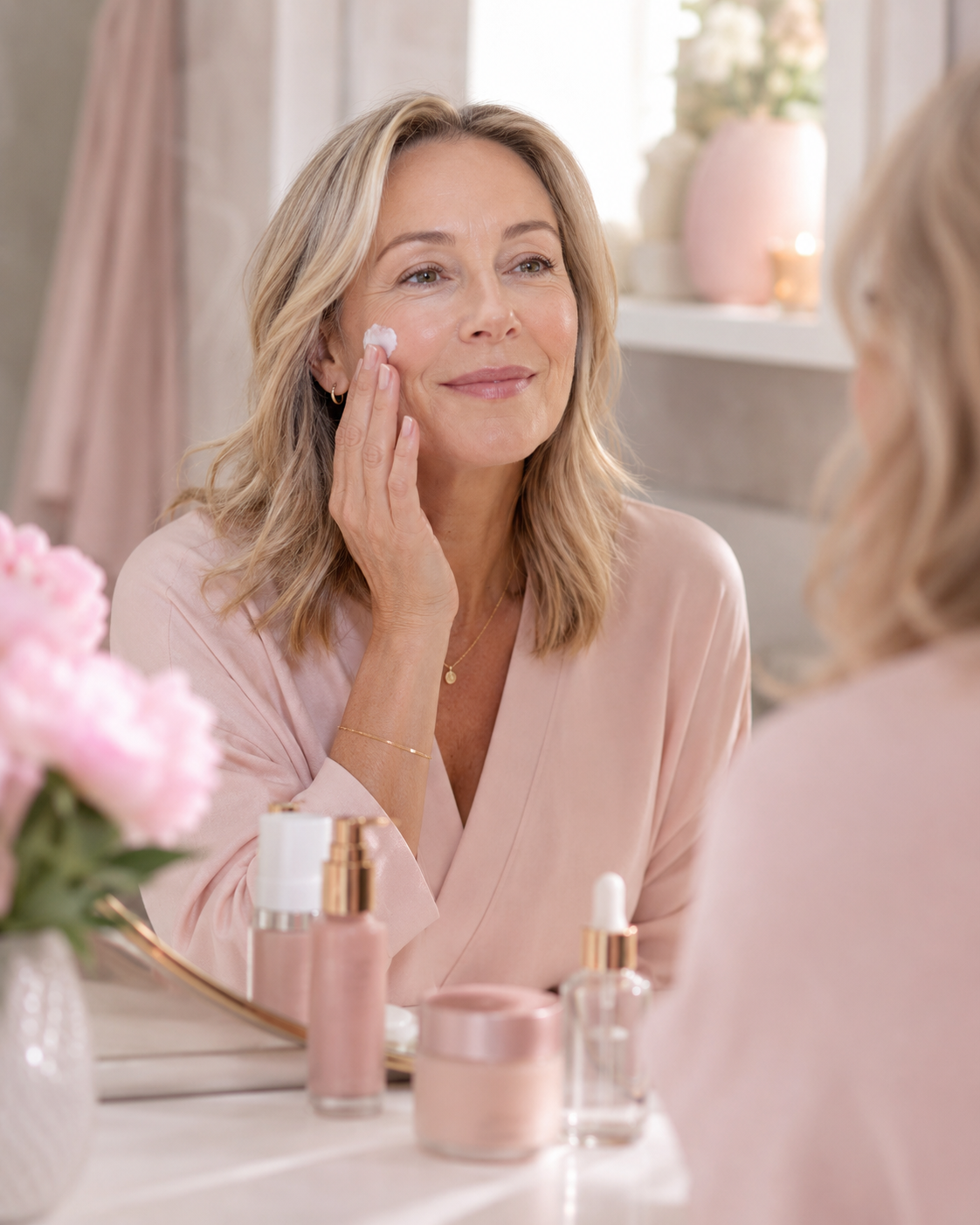
Menopause Skin Changes: Quick Answer
Menopause skin changes are common because hormone shifts, aging, collagen changes, dryness, sun exposure history, sleep loss, stress, and skin barrier weakness can all affect how skin looks and feels. Some women notice dry skin first. Others notice sensitivity, breakouts, dullness, dark spots, crepey texture, or fine lines that seem more visible.
These changes do not mean your skin needs to be attacked with harsh products. Midlife skin often needs the opposite: gentle cleansing, steady hydration, richer barrier support, daily sunscreen, and careful use of stronger ingredients.
If your skin suddenly becomes painful, severely itchy, infected, cracked, bleeding, or you notice a changing mole or a spot that will not heal, it is important to get medical guidance instead of assuming it is only menopause.
Menopause skin changes can feel emotional because your face and body may not feel familiar. A calmer routine can help protect comfort while you decide what your skin actually needs.
Why Menopause Skin Changes May Happen
Menopause skin changes may happen because estrogen shifts can affect moisture, oil production, skin thickness, and the way skin feels. Estrogen is connected to many skin-supporting processes, so it makes sense that changing levels may show up as dryness, sensitivity, or a loss of firmness.
Collagen also naturally declines with age. Collagen helps skin look firmer and more resilient, so changes in collagen, hydration, sun exposure history, genetics, stress, sleep, and health habits can all shape how midlife skin changes appear.
This is why menopause skin changes are rarely caused by only one thing. Your skin may be responding to hormone shifts, aging, past UV exposure, smoking, dehydration, poor sleep, harsh skincare, or a weakened skin barrier.
For a general medical overview of skin aging and everyday care, you can review the American Academy of Dermatology everyday skin care guide.
Common Menopause Skin Changes You May Notice
Menopause skin changes can look different from woman to woman. Some women mainly deal with dry skin. Others notice acne, redness, uneven tone, dullness, or a crepey look on the face, neck, chest, arms, or hands.
Dry or Tight Skin
Skin may feel uncomfortable after washing, or your moisturizer may stop feeling like enough. Dryness can also make fine lines look more noticeable.
More Sensitivity
A cleanser, vitamin C, acid toner, or retinoid that once felt normal may suddenly sting when the skin barrier is irritated.
Crepey Texture
Skin may look thinner or less elastic, especially around the eyes, neck, chest, arms, and hands.
Breakouts
Some women still get blemishes in midlife, especially around the chin and jawline, even when other areas feel dry.
Uneven Tone
Past sun exposure may become more visible over time. Dark spots and uneven tone often need patience and daily sunscreen.
Slower Recovery
Redness, dryness, scratches, or irritation may take longer to calm down than they did before midlife.
A Gentle Routine for Menopause Skin Changes
A supportive routine for menopause skin changes should begin with barrier care. Strong active ingredients can still have a place, but they usually work better when the skin is calm, moisturized, and protected.
Use a gentle cleanser
Choose a cleanser that leaves your face comfortable, not squeaky or tight. If your skin is very dry in the morning, a simple rinse may be enough for some people.
Add hydration before heavier moisture
Hydrating layers can help skin feel more comfortable. Ingredients such as glycerin, hyaluronic acid, panthenol, and soothing humectants may help if your skin tolerates them well.
Support the skin barrier
Ceramides, fatty acids, cholesterol, squalane, and nourishing moisturizers can help dry midlife skin feel more cushioned and less reactive.
Wear sunscreen every day
Sunscreen helps protect against UV damage that can worsen dark spots, texture, and visible aging. This step matters even if you are mostly indoors near windows.
Use actives carefully
Retinoids, exfoliating acids, and brightening ingredients may help some concerns, but they should be introduced slowly. Avoid stacking every strong product on the same night if your skin is already irritated.
What Can Make Menopause Skin Changes Feel Worse
Skin that is already dry, thin-feeling, or sensitive can become more reactive when too many strong products are used at the same time. It is common to panic when skin changes quickly, but using more products is not always better.
Common Triggers
- Over-cleansing or using harsh foaming cleansers
- Using retinoids, exfoliating acids, and vitamin C too aggressively
- Skipping moisturizer when the skin barrier feels weak
- Forgetting daily sunscreen
- Hot water, dry air, and low humidity
- Poor sleep, stress, dehydration, and smoking
Better Support
- Use lukewarm water instead of hot water
- Apply moisturizer while skin is slightly damp
- Keep exfoliation gentle and not too frequent
- Wear sunscreen on the face, neck, chest, and hands
- Give new products time before adding more
- Stop and simplify if skin starts burning or peeling
When to See a Dermatologist
Menopause skin changes are common, but certain symptoms deserve professional guidance. A dermatologist can help identify whether you are dealing with eczema, rosacea, acne, allergic reactions, sun damage, precancerous spots, or another skin condition.
Get checked if you notice a changing mole, a sore that does not heal, sudden rash, painful cracking, severe itching, bleeding, infection, or a skin change that worries you. It is better to ask than to ignore something important.
A dermatologist may also help you choose treatments for dryness, acne, dark spots, rosacea, or visible aging without damaging the skin barrier. Midlife skin often needs a thoughtful plan instead of a harsh routine.
Do not assume every skin change is menopause. Changing moles, non-healing sores, bleeding spots, severe itching, infection, or sudden painful rashes should be checked.
Your skin does not need to be punished.
Menopause skin changes can feel personal, but harsh routines often make midlife skin more reactive. Start with comfort, moisture, sunscreen, and consistency before adding stronger treatments.
Important Health Note
This page is for educational purposes only and should not replace medical advice, diagnosis, or treatment. Menopause skin changes can overlap with other skin conditions, allergies, infections, and sun-related concerns, so a qualified healthcare provider should evaluate sudden, severe, ongoing, worsening, or concerning symptoms.
This website may include affiliate links. If you purchase through certain links, Midlife Comfort Lab may earn a small commission at no extra cost to you. You can review the Privacy Policy and Amazon Affiliate Disclosure for more information.